From Farm to Cup – Part 2: Brewing Time, Presence, and Nature
The reason I visited the tea fields of Wazuka this time was not only to see how tea is cultivated, but also to learn how to brew green tea properly from Mika, a certified Japanese tea instructor.
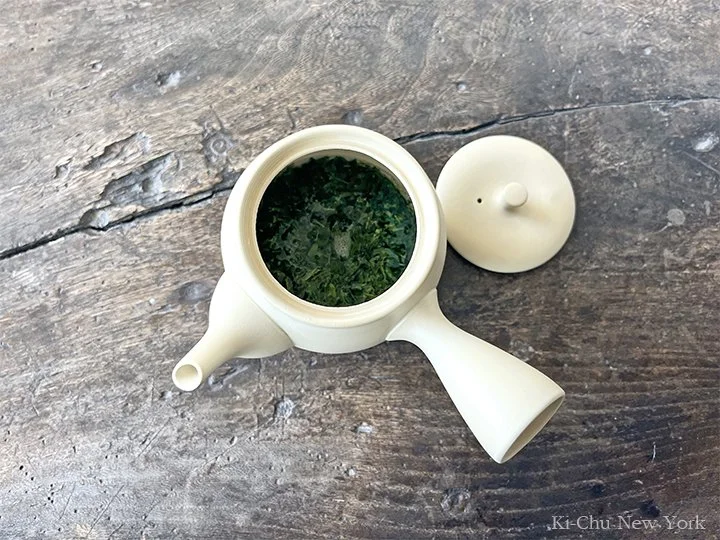
Brewing kabusecha slowly — watching the leaves unfold, revealing a quiet depth with each infusion.
Surprisingly, preparing high-quality sencha or gyokuro (玉露) can be quite difficult. When I was in high school, my mother and I once visited an artist. His mother, an elegant elderly woman, served us a cup of green tea so memorable that we looked at each other and quietly said, “This is so delicious.”
Amazingly, I still remember its gentle, almost silky sweetness — perhaps it was gyokuro. Since then, I have not encountered a cup that moved me in quite the same way, and this journey carried a quiet hope: to learn, to understand, and perhaps to rediscover that feeling once again.
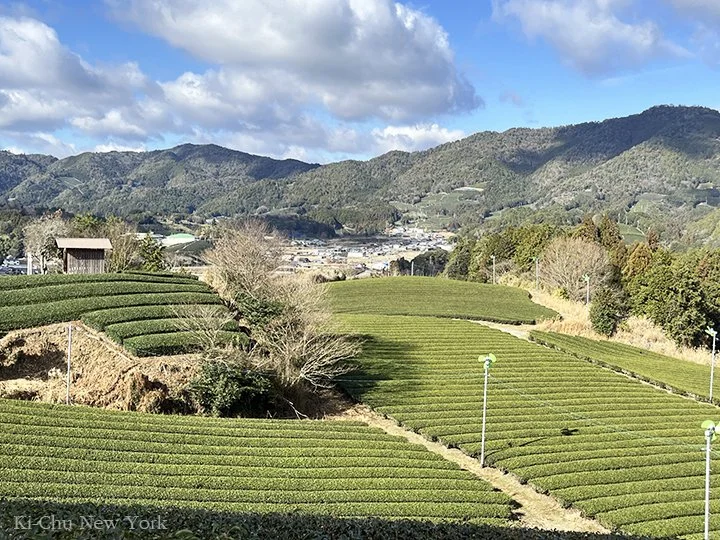
Azuma Tea Garden in Wazuka, Kyoto
Mika, who jokingly calls herself a “tea enthusiast,” welcomed every question with a bright smile. It felt as if she had been waiting for someone to ask. During this journey, I experienced not only matcha, but also kabusecha (かぶせ茶) — a tea that sits quietly between sencha (煎茶) and gyokuro (玉露).
Unlike sencha, which grows fully under the open sun and offers a refreshing clarity, kabusecha is gently shaded for about two weeks before harvest. Tencha (甜茶, the leaves used to make matcha) is also shaded, but for a longer period than kabusecha. The leaves contain L-theanine, an amino acid that contributes to umami. When exposed to sunlight, however, they produce more catechins, which bring a gentle astringency.
Shaded for a short period, kabusecha develops a balanced sweetness and umami, accompanied by a rich, layered aroma.
Prepared in a teapot, each infusion revealed a different character. The first cup, brewed at a lower temperature, unfolded with softness and fragrance — a moment that felt as if I had been carried back to the tea fields themselves. The second and third infusions, made with gradually hotter water, brought out deeper notes and a gentle bitterness, reminding me how temperature and time shape the personality of tea.
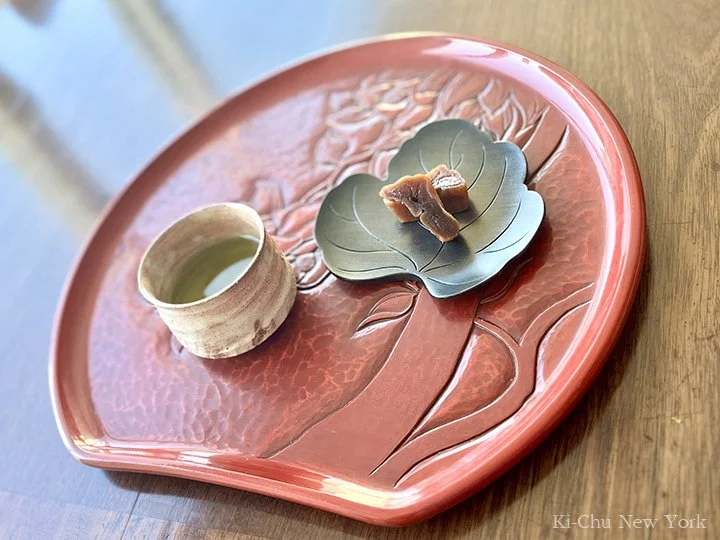
Kabusecha and dried persimmon - a moment of stillness.
What surprised me most was that the leaves themselves could be enjoyed afterward, dressed simply with ponzu like a delicate seasonal dish — a reminder that tea is not only a drink, but a living ingredient.
At Azuma Tea Garden, where the tea is grown organically without pesticides, I felt a deeper connection between cultivation, health, and daily life — as if receiving quiet blessings from nature itself. Although Teruko has spent many years working under the sun in the tea fields, her skin remains radiant and remarkably healthy. Watching her, I quietly felt that true nourishment might already exist in the simple rhythm of tea and nature. In that moment, I was reminded that tea is more than just a beverage.
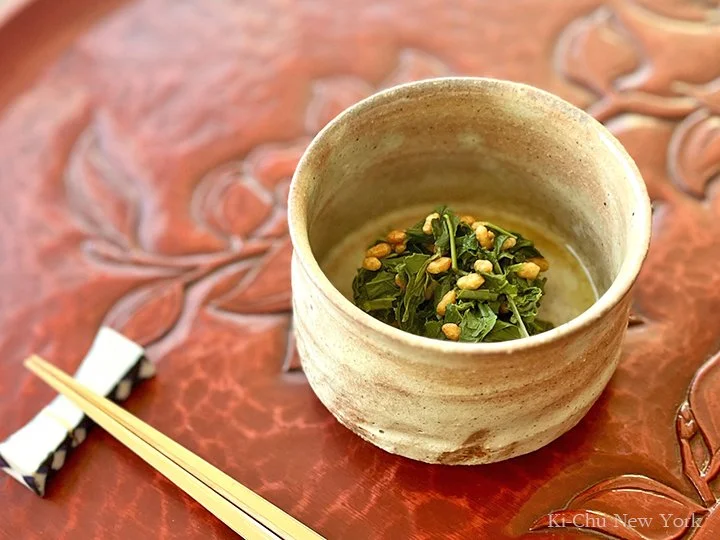
After brewing, the tea leaves take on a second life — dressed with roasted rice and a touch of ponzu, simple, nourishing, and quietly beautiful.
Meeting the people who cultivate the tea, and remembering their faces as you drink it, felt deeply meaningful. Every time I drink tea, my heart feels as if it is quietly flying back to Wazuka.
Taking the time to brew, wait, and savor each cup feels like a small act of quiet luxury. It becomes an essential pause — gently slowing the rhythm of life and allowing us to return to presence, one infusion at a time.
With every cup of tea, I am reminded of the many blessings we receive from nature.
This journey revealed to me that tea begins long before it reaches the cup — and continues quietly within us, long after the last sip.

Azuma Teanery — a quiet play on words inspired by “winery,” reflecting the idea that tea, like wine, is shaped by land, time, and care.