Moon Gazing — A Quiet Moment of Gratitude
Somehow, September is already drawing to a close, and only three months remain in the year. The air grows crisp, the sky seems higher, and the moon appears especially beautiful. In Japan, the autumn moon has long been cherished as especially beautiful—a gentle companion, admired with reverence and gratitude.
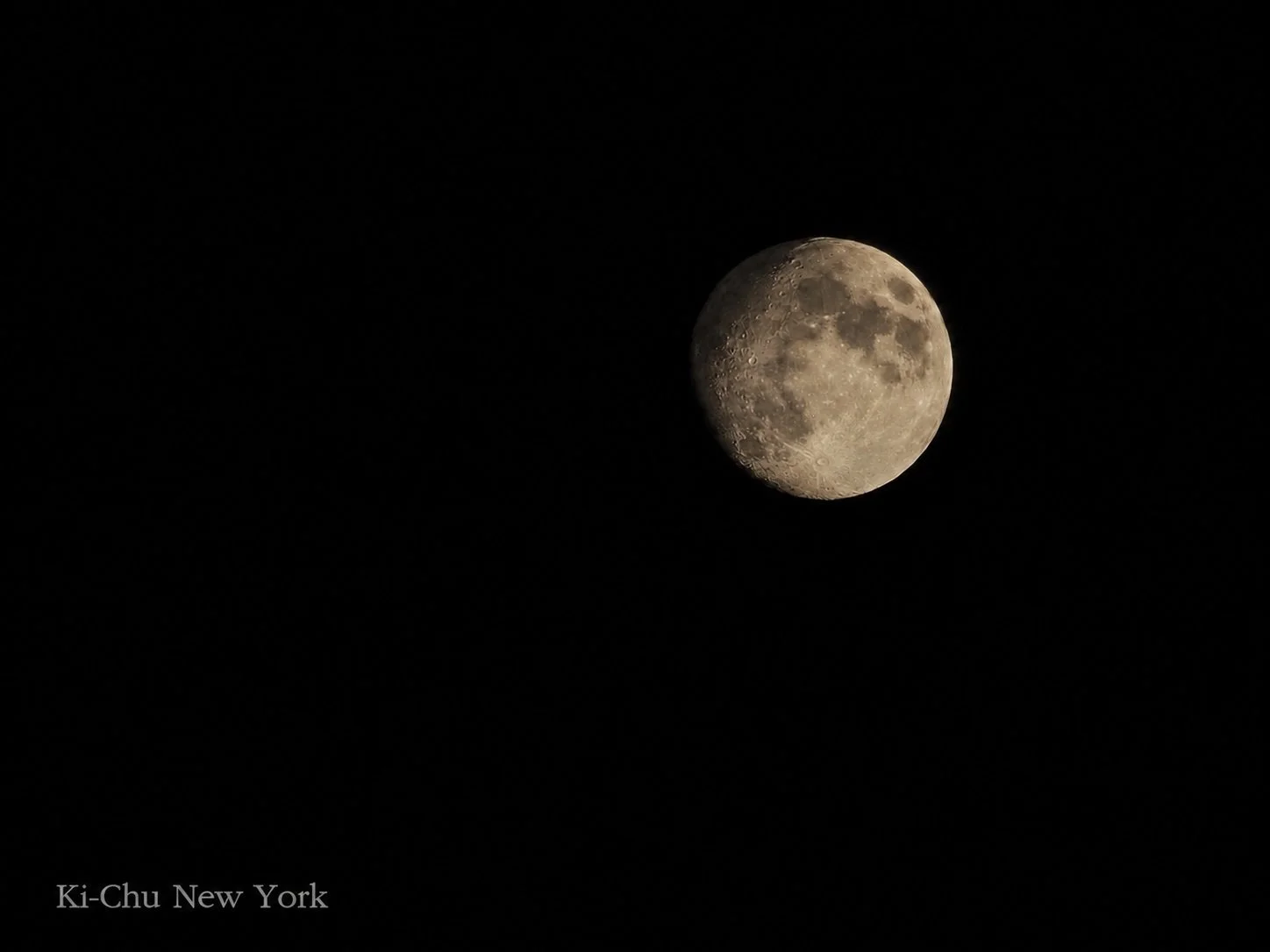
The moon, growing fuller night by night.
Moon viewing has a long history in Japan. During the Heian period (794–1185), court nobles gathered to admire the autumn moon. It is said that rather than looking directly up at the moon, they lowered their gaze to appreciate its reflection on the surface of a pond or in a cup of sake. This indirect way of viewing the moon was considered more refined, allowing its beauty to be experienced through the movement of water and the imagination. From boats on the water, they enjoyed sake, composed poetry, and listened to music as the reflected moon shimmered gently before them. I can imagine how elegant such a scene must have been.
Over time, the custom spread beyond the imperial court. By the Edo period (1603–1868), moon viewing became a popular harvest festival. People began offering tsukimi dango (rice dumplings) and susuki (Japanese pampas grass) to express gratitude for nature’s blessings. The grass, resembling ripening rice, was traditionally believed to welcome the gods. The luminous autumn moon also became a beloved subject in many ukiyo-e prints.
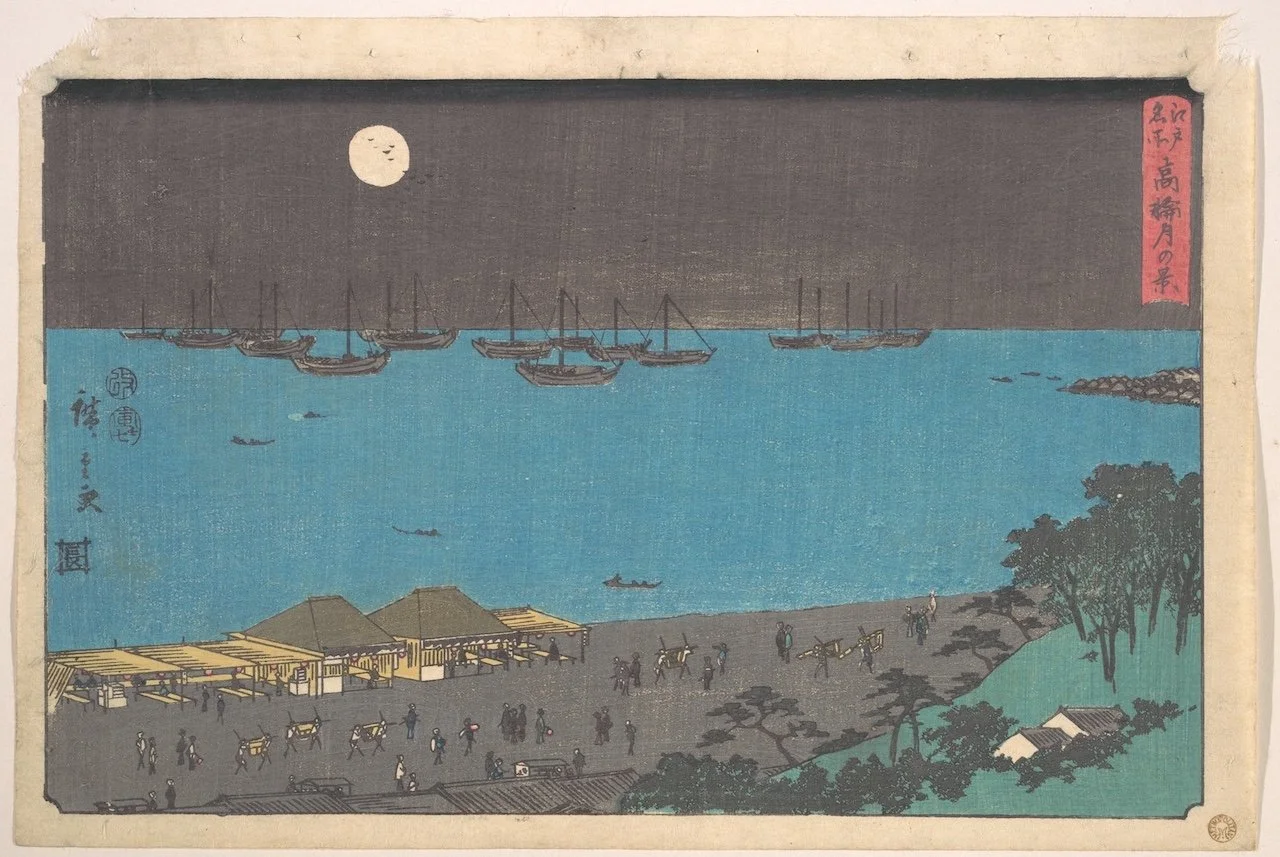
Takanawa Tsuki no Kei (Moon at Takanawa), Utagawa Hiroshige, 1854. The Metropolitan Museum of Art. In the Edo period, Takanawa was a celebrated place to watch the moon rise over the water.
What I find especially beautiful is that, in Japan, appreciation is not reserved for the full moon alone. The moon at each stage of its journey has its own name and character: mikazuki (三日月), the slender crescent moon; jōgen no tsuki (上弦の月), the first-quarter moon; and machiyoi no tsuki (待宵の月), the “waiting moon” seen on the evening before the full moon.
Beauty exists not only in perfection, but also in the process of becoming—and even in fading away. This sensitivity to change feels closely connected to wabi-sabi: finding beauty in what is incomplete, impermanent, and quietly passing.
In a world that moves so quickly, I think it is important to intentionally make room for quiet moments. When I still my mind and notice the quiet beauty of the night sky, I feel a gentle happiness—and remember that we, too, are part of nature.
This month, the moon will be full on September 26 in New York. From now until then, why not look up each evening and watch it grow a little rounder?
Perhaps simply noticing the changing moon is enough to bring us back to the rhythms of nature—and to all that we have to be grateful for.
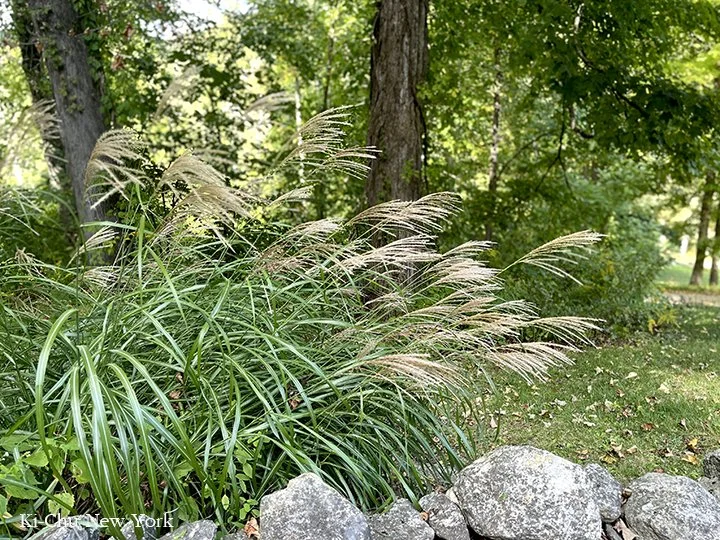
Susuki in our garden, traditionally displayed alongside tsukimi dango during moon viewing. Resembling ripening rice stalks, it is believed to welcome the gods.